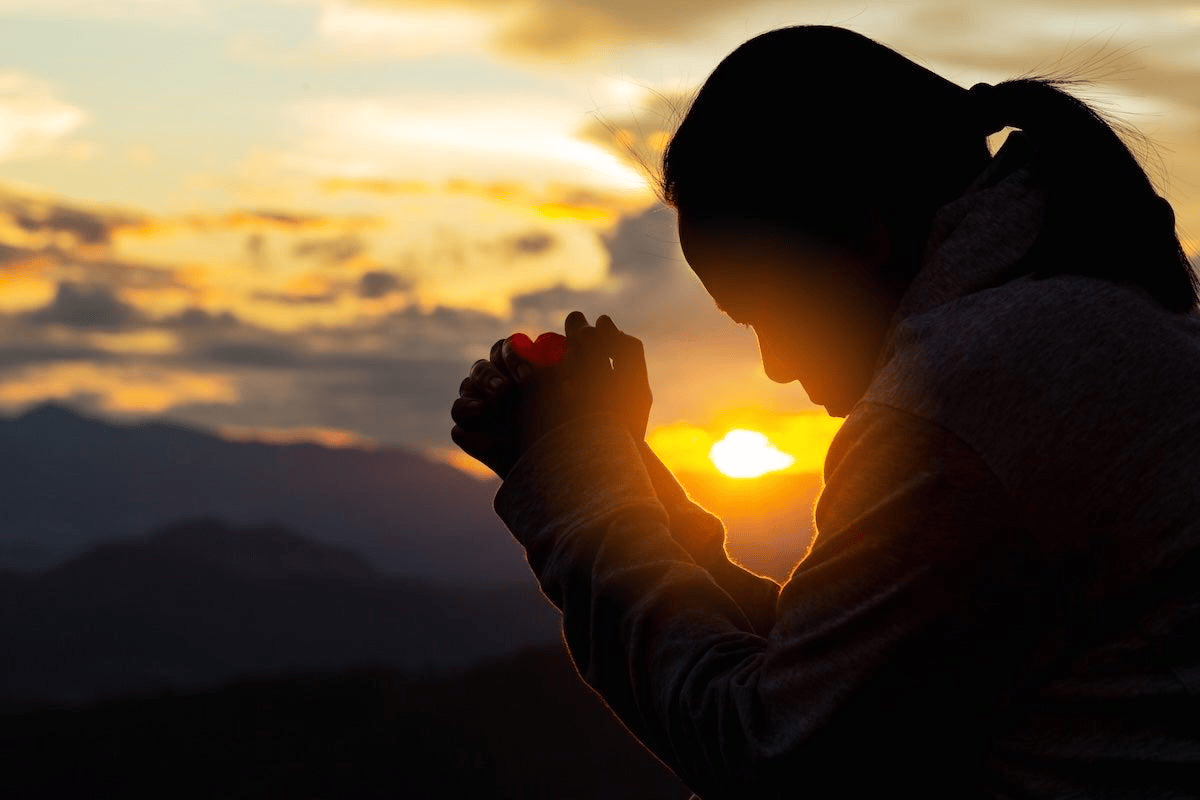
That might sound strange coming from someone who was raised going to Mass every morning before school, kneeling at the back pew with a Kleenex bobby-pinned into my hair because I’d forgotten a proper veil. I knew all the routines of faith long before I knew anything of its comfort. To me, God was simply one more parental figure, and given the parental figures I’d actually had, that was not a reassuring thought. I pictured Him the way I’d learned to picture every authority in my life: someone who could hurt you the moment you let your guard down. The last thing in the world I wanted was to hand my life over to one more person divine or otherwise who might run it into the ground.
So when my husband Ryan and I started attending a little Baptist church up the street, mostly because we thought it might help two young parents figure out how to work together, I wasn’t prepared for what happened next. A pastor came to visit us in our dining room one evening, and by the end of that visit, I was saved, crying in Ryan’s arms in our own kitchen, terrified that I was about to lose every part of myself I recognized. Ryan held on to me and told me I didn’t have to give anything up. I could take what I needed and let the Lord do the rest.
I wish I could tell you the fear vanished overnight. It didn’t. Trust doesn’t work that way, especially not for someone who learned as a child that trust was the surest way to get hurt. But something did begin to shift, slowly, the way frost eventually gives way to a thaw you almost don’t notice until it’s already happened.
Years later, Ryan and I felt called, and I mean that word carefully, because it startled us both to start a Marriage Encounter ministry through our church. It felt exactly like the kind of thing I would have once been too afraid to attempt: standing in front of forty strangers, telling them the truth about our marriage, about the masks we all wear to keep people from seeing us as we really are. On our very first weekend presenting, our luggage got lost, and by that night I had begun hemorrhaging worse than ever before, a warning sign of the hysterectomy I’d already been told I needed. I was devastated after all the hard work we had done to prepare that I’d have to leave. Instead, the other couples gathered around us and prayed. I made it through the whole weekend. I truly believe I shouldn’t have been able to.
That’s the strange thing about faith, at least in my experience: it rarely announces itself with a clear explanation for why terrible things happen. It doesn’t erase the abuse, the abandonment, the years of walking on eggshells in my own childhood home. It doesn’t make sense of a mother who could slap you across the face on your wedding day, or a body that nearly gave out decades later in a Covid ward when the doctors told you plainly that you weren’t going to make it. None of it made sense in the moment, and honestly, some of it still doesn’t.
What faith gave me instead was something quieter and, in the end, more useful than an explanation. It gave me a reason to believe that none of it was wasted. In writing this book, my faith became stronger as I realized that the Lord allowed me to live through everything I had experienced: the abandonment, the abuse, the extreme Alaskan winters, the years of hard, unglamorous work, so that I would be able to recognize the same pain in someone else and reach out a hand instead of looking away. I don’t say that to suggest suffering is ever deserved, or that God causes harm so a lesson can be learned later. I don’t believe that. I only know that when I look back at the wreckage of my early life, I can now see a thread running through it that I couldn’t see at the time and that thread eventually led me somewhere worth being.
If you are someone who has survived things that never got a satisfying explanation, and I suspect most survivors of childhood trauma are, I understand the instinct to keep your guard up against a God you were taught to fear, or to simply stop believing one is paying attention at all. I lived in that place for a long time. But I’d gently offer this: trusting God was never, for me, about suddenly understanding why everything happened. It was about deciding, in the middle of not understanding, to keep walking forward anyway and discovering, usually much later than I would have liked, that I hadn’t been walking alone.
If your own faith has ever carried you through a season that made no sense at the time, I’d love to hear about it in the comments below.